





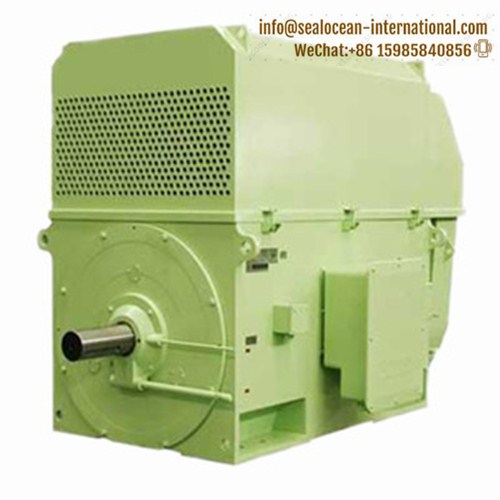
YKK High Voltage Motors: Industry Applications, Model Selection, Engineering Cases and Maintenance Knowledge
Industrial motor selection is rarely determined by rated power alone. Voltage, speed, driven equipment, starting torque, cooling method, installation arrangement, protection level, insulation system, ambient conditions and maintenance requirements must be evaluated together.
1. Industry Demand: Why Industrial Motor Selection Is Changing
Industrial plants increasingly require motors that can operate for long continuous periods while maintaining predictable temperature rise, mechanical stability and maintenance intervals. Large fans, pumps, compressors, mills, conveyors and ventilation systems can represent critical production assets, so an incorrect motor specification can affect both equipment availability and operating cost.
2. Engineering Problem: What Can Go Wrong With an Incorrect Motor?
An industrial motor that is technically incompatible with the driven equipment may experience excessive starting current, overheating, abnormal vibration, insufficient torque or premature bearing and insulation degradation.
- Incorrect rated power can lead to overload or inefficient operation.
- Incorrect speed can cause the driven machine to operate outside its design point.
- Insufficient protection may increase exposure to dust and moisture.
- Inappropriate cooling can increase thermal stress.
- Incorrect starting characteristics can create mechanical or electrical stress.
- Poor lubrication management can shorten bearing service life.
3. Technical Analysis: Main Parameters for High Voltage Motor Selection
| Parameter | Engineering Consideration | Typical Selection Question |
|---|---|---|
| Rated Power | Must match the continuous mechanical load with appropriate engineering margin. | What is the actual shaft power requirement? |
| Rated Voltage | Common industrial high voltage options include 6 kV and 10 kV. | What is the plant distribution voltage? |
| Frequency | Normally selected according to the electrical network and application. | 50 Hz or 60 Hz? |
| Speed | Determined by pole number and driven equipment requirements. | Does the fan, pump or compressor require 2, 4, 6, 8 or more poles? |
| Protection | IP54 or IP55 may be selected according to environmental requirements. | How much dust and moisture exposure exists? |
| Cooling | IC611 air-to-air cooling is widely used for industrial installations. | Is external cooling water available? |
| Insulation | F-class insulation is commonly specified for heavy-duty industrial motors. | What thermal and electrical insulation requirements apply? |
| Temperature Monitoring | PT100 sensors may be installed in stator windings and bearings. | Is online temperature monitoring required? |
| Installation | Frame and mounting arrangement must match the driven machine and foundation. | What installation arrangement and shaft geometry are required? |
4. YKK Motor Product Series and Related Industrial Motor Families
5. YKK Common Model and Technical Parameter Reference
| Model | Power | Voltage | Speed | Insulation | Protection | Cooling |
|---|---|---|---|---|---|---|
| YKK355-4 | 220 kW | 6/10 kV | 1485 r/min | F | IP54 | IC611 |
| YKK400-4 | 315 kW | 6/10 kV | 1480 r/min | F | IP54 | IC611 |
| YKK400-6 | 250 kW | 6/10 kV | 985 r/min | F | IP54 | IC611 |
| YKK450-4 | 450 kW | 6/10 kV | 1480 r/min | F | IP54 | IC611 |
| YKK450-6 | 355 kW | 6/10 kV | 980 r/min | F | IP54 | IC611 |
| YKK500-4 | 630 kW | 6/10 kV | 1480 r/min | F | IP54 | IC611 |
| YKK500-6 | 500 kW | 6/10 kV | 985 r/min | F | IP54 | IC611 |
| YKK560-6 | 800 kW | 6/10 kV | 980 r/min | F | IP54 | IC611 |
Voltage can be engineered for 6 kV or 10 kV according to project requirements. IC611 represents an air-to-air cooling arrangement. IP55 can be considered for applications requiring increased protection. Final motor parameters should be confirmed against the project technical specification and nameplate data.
6. Engineering Application Cases: 30 Model-Based Industrial Records
The following cases are structured as engineering application records. The first six preserve the application information supplied for this article. The remaining records should be matched with the final project specification, nameplate and commissioning documentation before being described publicly as customer-specific projects.
Case 01 — Thermal Power Plant Circulating Water Pump
Application: Circulating water pump auxiliary system.
Engineering Need: Continuous operation, stable temperature and low maintenance.
Solution: High voltage squirrel cage motor with PT100 monitoring and VFD-based operating control.
Case 02 — Chemical Plant Process Fan
Application: Process fan in a chemical production line.
Engineering Need: Dust, weakly corrosive atmosphere and no external cooling-water source.
Solution: IC611 air-to-air cooling, F-class insulation and continuous-duty configuration.
Case 03 — Steel Plant Sintering Fan
Application: Sintering production-line fan.
Engineering Need: Dust, periodic impact load and high mechanical reliability.
Solution: Reinforced frame construction and application-specific mechanical design.
Case 04 — Cement Kiln Exhaust Fan
Application: Kiln-tail exhaust fan for a dry-process cement line.
Engineering Need: High dust loading and long annual operating hours.
Solution: IC611 air-to-air cooling with winding and bearing temperature monitoring.
Case 05 — Petrochemical Centrifugal Compressor
Application: Centrifugal compressor in a hydrogen process unit.
Engineering Need: Humid and corrosive atmosphere.
Solution: Customized anti-corrosion coating system and environmental protection measures.
Case 06 — Mining Main Ventilation Fan
Application: Main mine ventilation fan.
Engineering Need: Dust and humidity requiring enhanced enclosure protection.
Solution: IP55 configuration with robust mechanical construction.
Case 07 — Power Plant Boiler Fan
Application: Boiler forced-draft or induced-draft fan.
Selection Focus: Fan load, speed, continuous duty, cooling and bearing monitoring.
Case 08 — Water Treatment Pump
Application: Large process-water pump.
Selection Focus: Pump speed, hydraulic operating point, motor power and voltage compatibility.
Case 09 — Cement Raw Mill Auxiliary Drive
Application: Cement raw-material handling equipment.
Selection Focus: High continuous load, dust protection and thermal monitoring.
Case 10 — Steel Plant Exhaust Fan
Application: Steel-production exhaust system.
Selection Focus: Dust exposure, fan inertia, vibration control and thermal management.
Case 11 — Mining Conveyor Drive
Application: Heavy-duty mine conveyor.
Selection Focus: Starting torque, load variation and controlled starting characteristics.
Case 12 — Metallurgical Rolling Mill Auxiliary System
Application: Large auxiliary mechanical drive.
Selection Focus: Starting performance, load variation and mechanical transmission requirements.
Case 13 — Large Industrial Water Pump
Application: Industrial circulation-water pump.
Selection Focus: Cooling arrangement, pump speed and continuous operation.
Case 14 — Power Station Cooling Fan
Application: Large cooling-air fan.
Selection Focus: Fan inertia, ventilation load and thermal performance.
Case 15 — Petrochemical Process Pump
Application: Process pump in a continuous production unit.
Selection Focus: Rated power, voltage, speed, environment and motor protection.
Case 16 — Mine Drainage Pump
Application: Mine drainage and dewatering system.
Selection Focus: Continuous load, moisture exposure, protection level and bearing monitoring.
Case 17 — Cement Plant Dust Extraction Fan
Application: Dust extraction fan.
Selection Focus: Dust environment, fan operating point and heat dissipation.
Case 18 — Steel Plant Cooling Pump
Application: Cooling-water circulation pump.
Selection Focus: Pump duty point, motor efficiency, cooling and protection.
Case 19 — Power Plant Coal Handling Fan
Application: Coal-handling ventilation equipment.
Selection Focus: Dust management, motor protection and continuous-duty reliability.
Case 20 — Mining Ventilation System
Application: Large mine ventilation fan.
Selection Focus: Air volume, fan speed, enclosure protection and temperature monitoring.
Case 21 — Hazardous-Area Pump Drive
Application: Industrial pump in a hazardous-area installation.
Selection Focus: Hazardous-area classification, explosion protection and electrical specification.
Case 22 — Petrochemical Ventilation Equipment
Application: Ventilation equipment in a petrochemical facility.
Selection Focus: Hazardous-area requirements and enclosure protection.
Case 23 — General Industrial Pump
Application: General industrial centrifugal pump.
Selection Focus: Efficiency, operating point, installation and service conditions.
Case 24 — Industrial Fan Energy Upgrade
Application: Industrial ventilation fan.
Selection Focus: Energy efficiency, load matching and operating profile.
Case 25 — DC Industrial Drive
Application: Specialized industrial DC drive.
Selection Focus: DC supply, speed regulation and drive-system compatibility.
Case 26 — Heavy Industrial DC Drive
Application: Large industrial DC machinery.
Selection Focus: Torque, speed control, cooling and electrical interface.
Case 27 — Industrial Hoisting Equipment
Application: Specialized industrial hoisting equipment.
Selection Focus: Starting characteristics, torque requirements and duty cycle.
Case 28 — Explosion-Proof Process Equipment
Application: Process equipment in a classified industrial environment.
Selection Focus: Explosion protection, temperature class and area classification.
Case 29 — High Voltage Crusher Drive
Application: Large mining or mineral-processing crusher system.
Selection Focus: Starting torque, impact load, mechanical strength and maintenance access.
Case 30 — Large Steel Mill Fan
Application: Large steel-mill ventilation or process fan.
Selection Focus: High voltage operation, continuous load, cooling, vibration and environmental protection.
7. Industrial Motor Knowledge Center
How to Select a YKK High Voltage Motor?
Start with the driven-machine load rather than selecting a motor only by frame size. Confirm shaft power, rated speed, starting torque, voltage, frequency, duty cycle, environmental conditions and installation requirements. For fans and pumps, the operating point of the driven equipment should be considered together with motor efficiency and speed.
YKK vs YKS Motors
YKK and YKS are high voltage industrial motor families, but the final selection depends on the required cooling arrangement, mechanical design, installation conditions and project specification. The engineering datasheet should be used to determine the appropriate configuration.
YKK vs YRKK Motors
YKK motors use a squirrel-cage rotor configuration, while YRKK motors belong to the wound-rotor family. For large machinery with demanding starting characteristics, the wound-rotor configuration may be considered when specified by the electrical and mechanical system design.
Why Is IC611 Important?
IC611 is an air-to-air cooling arrangement. It is useful where the motor installation does not have a convenient external cooling-water supply. The cooler still requires periodic inspection and cleaning to maintain heat-transfer performance.
Why Are PT100 Sensors Used?
PT100 temperature sensors can monitor stator winding and bearing temperature. Temperature trends can help operators identify abnormal thermal conditions before they develop into more serious equipment problems.
High Voltage Motor Maintenance
- Measure insulation resistance according to the maintenance procedure.
- Inspect winding and bearing temperature signals.
- Monitor vibration and abnormal noise.
- Inspect lubrication oil and bearing condition.
- Clean the air cooler and ventilation passages.
- Inspect foundation bolts and coupling alignment.
- Verify grounding and electrical connections.
- Protect stored motors against moisture and contamination.
8. IEC Standards and Engineering Compliance
Industrial motor projects should be reviewed against the applicable international and local standards specified in the project documentation. IEC standards can provide the electrical and mechanical framework for motor design, testing and performance requirements.
- IEC electrical motor standards
- IEC protection classifications
- IEC insulation and temperature requirements
- IEC hazardous-area requirements where applicable
- Local electrical installation requirements
- Project-specific testing and acceptance procedures
For international projects, the motor specification should also be checked against the customer's required electrical system, local regulations and procurement specification.
9. Industrial Motor Application by Industry
| Industry | Typical Equipment | Relevant Motor Considerations |
|---|---|---|
| Power Generation | Fans, pumps, blowers, coal handling equipment | Continuous duty, temperature monitoring, reliability |
| Steel | Sintering fans, cooling pumps, conveyors, auxiliary drives | Dust, vibration, impact load, thermal management |
| Cement | Raw mills, kiln fans, exhaust fans | Dust protection, long operating hours, cooling |
| Mining | Ventilation fans, conveyors, crushers, drainage pumps | Dust, humidity, starting torque, mechanical loading |
| Petrochemical | Process pumps, compressors, fans | Environment classification, corrosion, electrical protection |
| Water Treatment | Large centrifugal pumps and fans | Hydraulic operating point, efficiency, continuous duty |
11. Product and Engineering Navigation
This article should operate as the engineering entry point rather than competing directly with every product page. Visitors can move from the engineering problem to the relevant motor family, then to the detailed product specification and finally to an RFQ.
12. Engineering Video
The Sealocean industrial engineering video channel provides additional visual information about motors, spare parts, industrial equipment and engineering applications.
13. Frequently Asked Questions
What is a YKK high voltage motor?
A YKK motor is a high voltage three-phase industrial motor family commonly used for fans, pumps, compressors, mills and other large mechanical loads. Final specifications depend on the project requirements.
What voltage can a YKK motor use?
Common project configurations include 6 kV and 10 kV, while voltage should ultimately be matched to the customer's electrical distribution system.
What is the difference between YKK and YRKK motors?
YKK generally refers to squirrel-cage high voltage motors, while YRKK belongs to the wound-rotor motor family. Starting requirements and driven equipment characteristics determine which configuration is appropriate.
Is IC611 suitable for industrial applications?
IC611 air-to-air cooling can be suitable for many industrial applications, especially where external cooling water is not available. Environmental conditions and motor heat dissipation must still be evaluated.
What protection level should be selected?
IP54 and IP55 are common reference configurations. The appropriate level depends on dust, moisture and environmental exposure at the installation.
Why are PT100 sensors installed in industrial motors?
PT100 sensors provide temperature monitoring for components such as stator windings and bearings, helping operators identify abnormal thermal trends.
Can Sealocean supply OEM industrial motors?
OEM and customized engineering supply can be discussed according to motor model, rated power, voltage, frequency, speed, cooling, protection, installation and project documentation.
What information is required for a motor RFQ?
A useful RFQ should include the required model or motor type, power, voltage, frequency, speed, protection level, cooling method, mounting arrangement, quantity, driven equipment and project application.
Request an Industrial Motor Engineering Solution
Send the motor model, power, voltage, speed, cooling method, protection level, application and quantity. Sealocean can review the technical requirements and prepare a product or OEM quotation.
Email: [email protected]
Export Email: [email protected]
WhatsApp: +86 15985840856
RFQ Topics: YKK · YKS · YRKK · YRKS · YB · YBX3 · YBX4 · YBX5 · YE3 · YE4 · Z · Z4 · ZZJ


 Chinese
 Deutsch
 Espanol
 Francais
 Italiano
 Portugues
 Japanese
 Korean
 Arabic
 Russian
